Projects
The Creative Technology territory. Tools and creative work from Organic Arts LLC: software, music, animation, games. Each one built with AI collaboration; each one exploring what creative work looks like when it is built from code with an AI agent at your side.
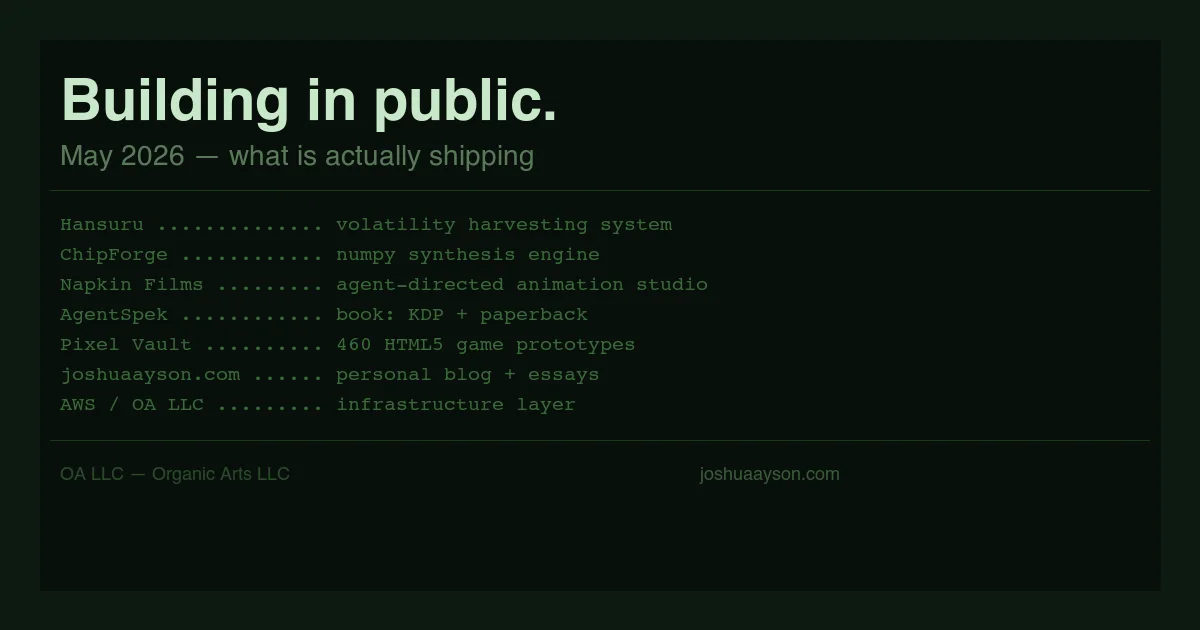
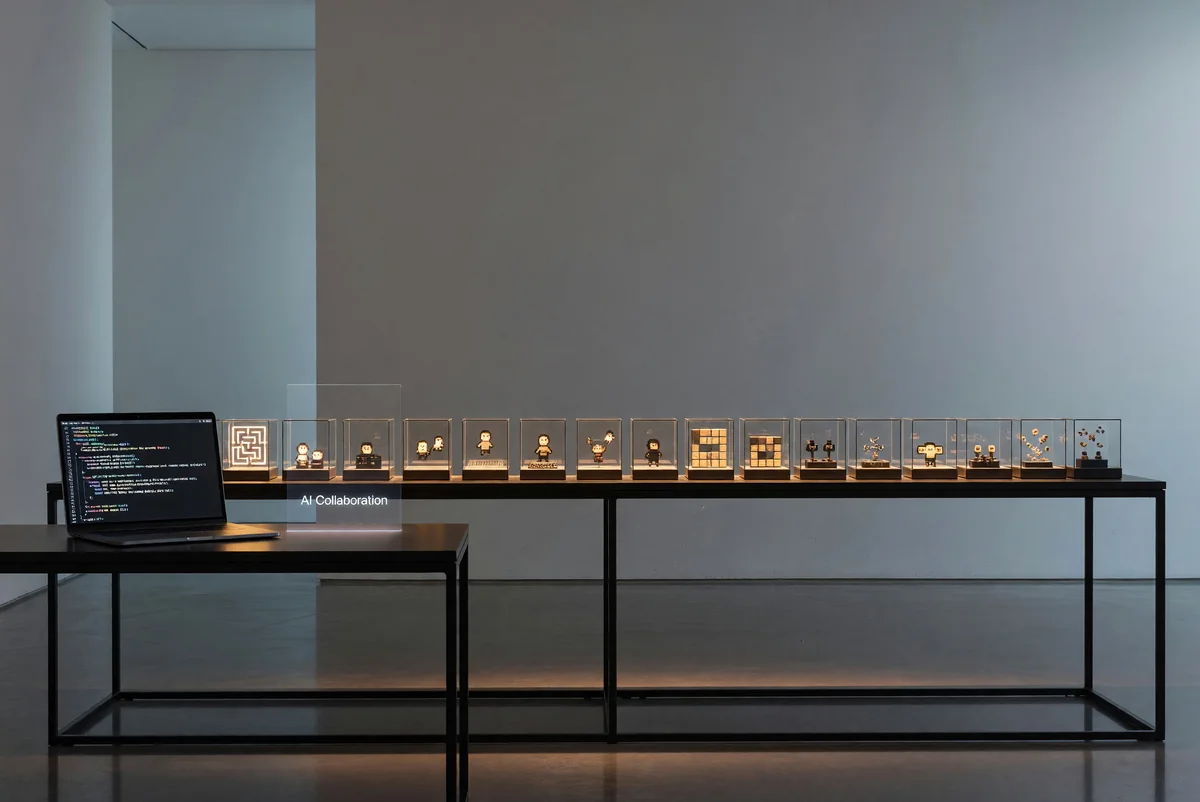
314 playable HTML5 game prototypes. One file each, zero dependencies.
A museum of every fundamental game mechanic, reconstructed in its smallest possible form. Each prototype traces its lineage to real arcade history and is playable in 5 seconds by double-clicking. Three tracks: classic archetypes, AI archaeology overlays, and AI-originated experiments.
HTML5 CanvasVanilla JSSingle-File
Music synthesis engine, voices, guitars, and orchestras from pure math.
Every sound generated from scratch in Python and numpy: no samples, no recordings, no audio libraries. It started as a Game Boy-style chip tune engine and grew into full synthesis, synthesized voices, instruments, and orchestral scores driven by an AI composition pipeline. It scores every Napkin Film, and the releases now live on the music page.
PythonNumPyDSPFastAPI
Agent-directed animation studio. Animated short films, made from code.
Animated short films produced entirely from code: no GPU, no AI video generators, no stock media. Stick-figure characters give real performances through expressive poses, multi-voice AI narration, and original ChipForge scores. Two engines: PIL (Python) and HTML5 Canvas. Browse the full catalog at /films/.
PythonPillowElevenLabsFFmpeg
Antifragile learning engine. Produce first, drill what breaks.
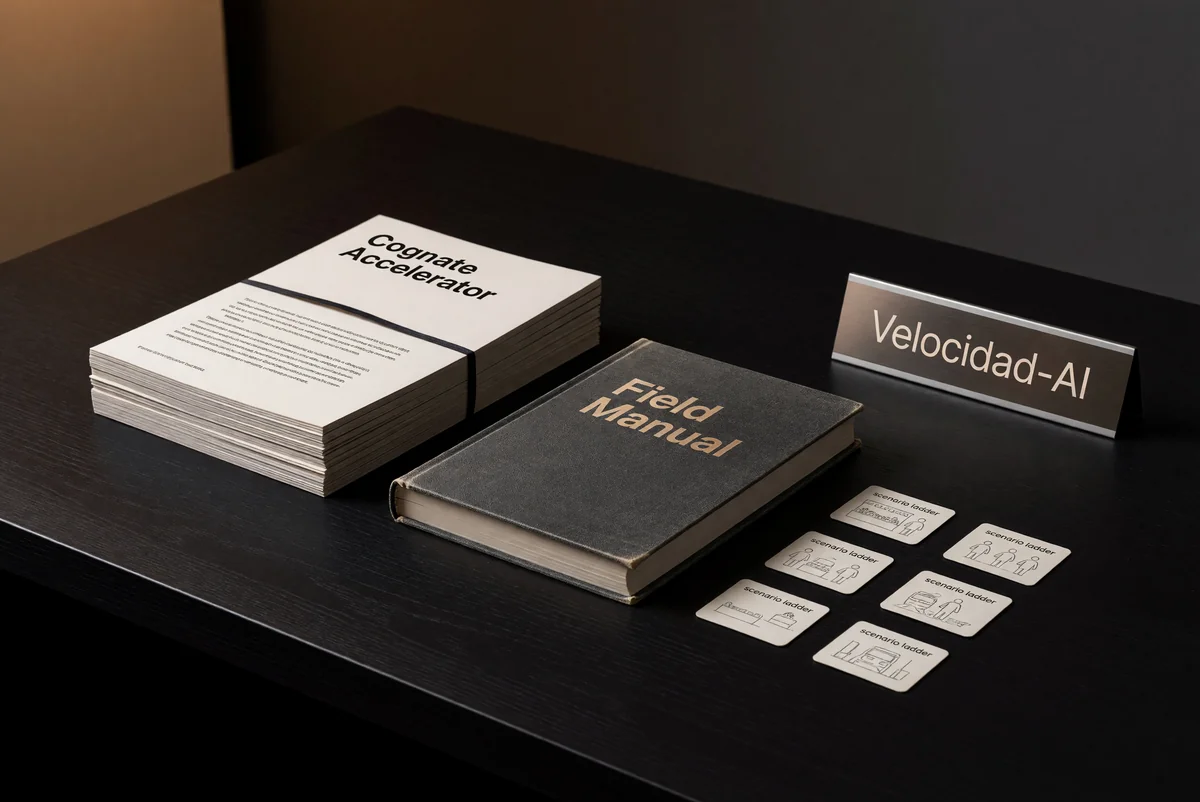
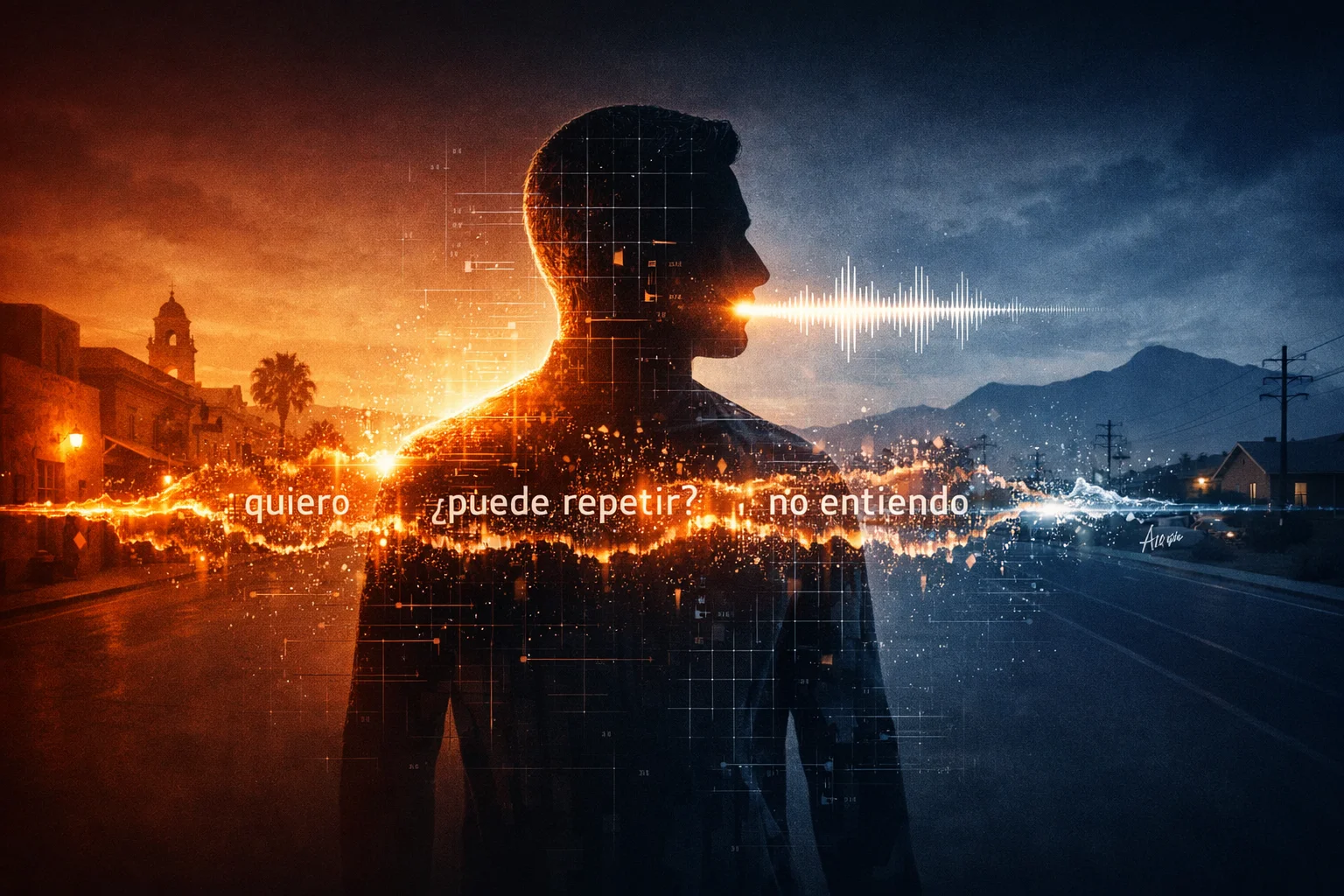
Started as a Spanish fluency system; now a general-purpose knowledge engine. AI agents run the practice loop and plain-text markdown holds the curriculum: produce under pressure, log what broke, drill the friction, produce again. No app, no account, no subscription, runs in any AI chat window.
MarkdownAgent ModeSRSPrompt Engineering
Plan 9's imagination playground.
A standalone interactive playground set in the world of the Plan 9 films: a place to wander the universe rather than just watch it. Kept as its own site and surfaced here as part of the creative-technology ecosystem.
WebCreative Coding